
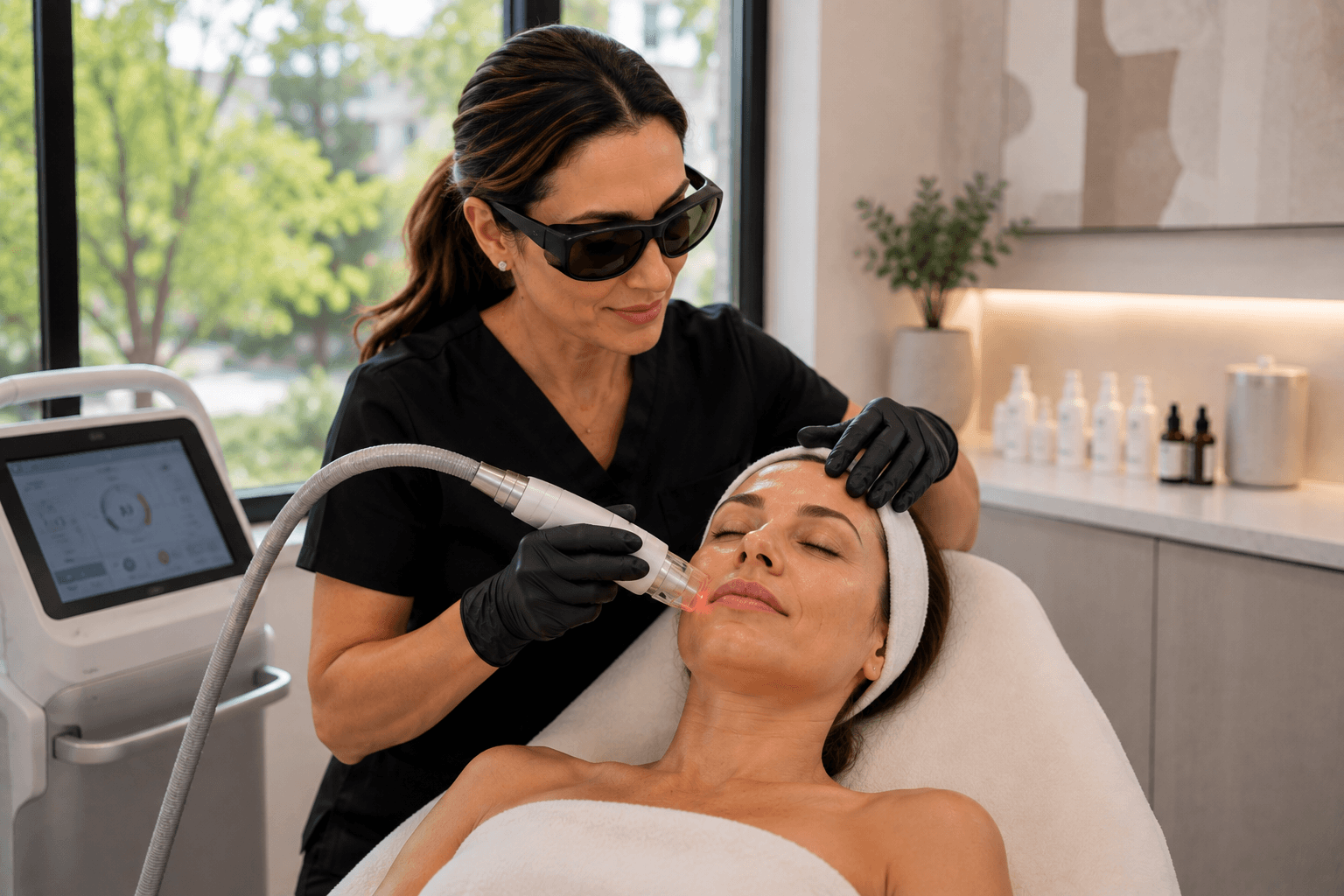
Not every skin concern responds to surface-level care. Deeper acne scarring, significant sun damage, and more stubborn texture issues often need a treatment that reaches beneath the outermost layer of skin to make a real difference. That's the territory ablation treatment covers, and it's a term that comes up often once someone starts researching more advanced, results-driven skin treatments.
At Re-Glo Aesthetics in Los Gatos, California, ablation is offered through the Aerolase Era, a laser system that allows for precise, customizable treatment depth. This guide breaks down what ablation actually means, how it differs from lighter resurfacing options, and how to know if it's the right fit for your skin.
What Does Ablation Treatment Mean?
Ablation refers to the controlled removal of damaged or compromised layers of skin using a laser, prompting the body to generate new, healthier tissue in its place. Unlike non-ablative treatments, which heat the skin without removing surface tissue, ablative treatments physically vaporize a targeted layer of skin cells. This distinction matters because it's part of why ablative treatments tend to produce more dramatic results, particularly for deeper concerns.
The Aerolase Era uses a 2940 nm Er:YAG laser, which allows providers to select from superficial, medium, and deep ablation levels depending on what a client's skin needs. This tiered approach means ablation isn't a one-size-fits-all treatment. It's calibrated to match the severity of the concern being addressed.
What Skin Concerns Call for Ablation Treatment?
Deeper Acne Scarring
Textural scars left behind by cystic or severe acne often don't respond well to surface treatments alone. Ablation reaches the depth needed to stimulate meaningful collagen remodeling in scarred tissue.
Significant Sun Damage
Years of cumulative UV exposure can create deep textural changes, persistent rough patches, and stubborn discoloration that lighter treatments struggle to fully resolve.
Deeper Wrinkles and Skin Laxity
While fine lines often respond to lighter resurfacing, deeper wrinkles and noticeable skin laxity typically require a more intensive ablative approach to see substantial improvement.
Skin Tags and Benign Lesions
Certain benign skin growths can be addressed through targeted ablation, offering a non-surgical alternative for removal.
Advanced Photoaging
Long-term sun exposure creates a combination of concerns, including deep wrinkles, uneven texture, and pigment changes, that often respond best to a more thorough ablative approach rather than piecemeal treatment of each individual symptom.
What Causes These Deeper Skin Concerns?
Deep textural and tonal skin concerns are typically the result of cumulative damage over years, sometimes decades. Chronic sun exposure breaks down collagen and elastin fibers faster than the body can rebuild them, and this damage compounds over time. Acne scarring forms when the skin's healing response to inflammation creates uneven collagen distribution, leaving behind depressions or raised tissue.
Genetics also plays a role in how visibly skin ages and scars, as does skin type, with thinner or more sun-sensitive skin often showing damage earlier and more severely. Understanding these root causes helps explain why lighter, more superficial treatments sometimes fall short for these particular concerns, and why a deeper ablative approach can make a meaningful difference.
How Is Ablation Different From Standard Skin Resurfacing?
This is a common point of confusion, and understandably so, since ablation is technically a form of resurfacing. The distinction comes down to depth and intensity. Superficial resurfacing, which involves little to no downtime, addresses milder concerns like dullness and mild texture irregularities. Ablation, particularly at medium or deep settings, goes further into the skin to address more significant concerns, which is why it requires more recovery time but tends to deliver more dramatic, longer-lasting results.
If you're weighing whether a lighter approach might suit your concerns better, our earlier article on whether your skin is ready for non-invasive wrinkle reduction offers a helpful comparison point.
Who Is a Good Candidate for Ablation Treatment?
Good candidates for ablation treatment typically:
- Have deeper scarring, wrinkles, or sun damage that hasn't responded well to lighter treatments or skincare alone
- Are prepared for a recovery period that may range from several days to over a week, depending on the depth selected
- Do not have active skin infections, certain autoimmune conditions, or other contraindications identified during a consultation
- Want a treatment approach that delivers more substantial, visible change rather than gradual, subtle improvement
Because ablation is more intensive than lighter resurfacing, a thorough consultation is especially important. Your provider at Re-Glo will evaluate your skin, discuss your goals, and confirm whether ablation is the appropriate depth of treatment or whether a lighter approach would achieve your goals with less downtime.
What Happens During an Ablation Session?
Your provider will select the appropriate ablation depth based on your specific concerns and skin type. Topical numbing is typically applied, especially for medium and deep settings, and the treatment itself generally takes between twenty and sixty minutes depending on the treatment area. The Aerolase Era's short pulse duration is designed to target damaged tissue precisely while minimizing collateral impact on surrounding healthy skin.
What Does Recovery Look Like?
Recovery time scales directly with treatment depth:
Superficial ablation typically involves minimal downtime, with mild redness resolving within a day.
Medium-depth ablation generally causes redness and light flaking for two to four days as the skin sheds the treated layer.
Deep ablation requires the most recovery, often five to seven days or more, with more pronounced redness and peeling, but this depth tends to produce the most significant, noticeable transformation.
During recovery, diligent sun protection is essential, along with gentle skincare and avoiding active ingredients like retinoids until your provider clears you to resume them.
How Many Ablation Sessions Are Typically Needed?
Many clients see meaningful improvement after a single deep ablation session, particularly for scarring or significant sun damage. That said, some concerns benefit from a series of lighter sessions rather than one intensive treatment, and your provider will help determine which approach best matches your goals, skin type, and tolerance for downtime.
Why Choose Re-Glo Aesthetics for Ablation Treatment in Los Gatos?
Re-Glo Aesthetics approaches ablation with the same care applied to every treatment offered: a thorough consultation, a customized plan, and a focus on results that look natural rather than overdone. Because the Aerolase Era offers multiple depth settings, your provider can tailor treatment intensity precisely to your skin's needs rather than defaulting to a single approach for everyone.
Ready to Explore Whether Ablation Is Right for You?
Schedule a consultation with Re-Glo Aesthetics to discuss your skin concerns and find out whether ablation treatment fits your goals.
Going Deeper, Looking Better
Ablation treatment isn't for every skin concern, but for the ones it's built to address, deeper scarring, significant sun damage, more advanced signs of aging, it can deliver results that lighter treatments simply can't match. If you've been living with a concern that hasn't budged despite trying everything else, this might be the treatment that finally moves the needle.
Updated August 2026.
Frequently Asked Questions
Is ablation treatment painful? Discomfort varies by depth. Superficial ablation is generally well tolerated, while medium and deep ablation typically involve topical numbing beforehand to keep the treatment comfortable.
How long does recovery from ablation treatment take? Recovery ranges from minimal downtime for superficial ablation to five to seven days or more for deeper treatments, depending on the depth selected and individual healing response.
Is ablation treatment safe for all skin tones? The Aerolase Era was designed with a reduced risk of post-inflammatory hyperpigmentation, making it a suitable option for a wide range of skin tones, though a consultation helps confirm individual candidacy.
How is ablation different from microneedling? Ablation uses laser energy to remove targeted layers of skin, while microneedling creates micro-injuries with fine needles to trigger a healing response. Both stimulate collagen production, but ablation generally reaches deeper concerns more directly.
Will I need more than one ablation treatment? It depends on your specific concern. Some clients see significant results from a single deep ablation session, while others benefit from a series of lighter treatments over time.