
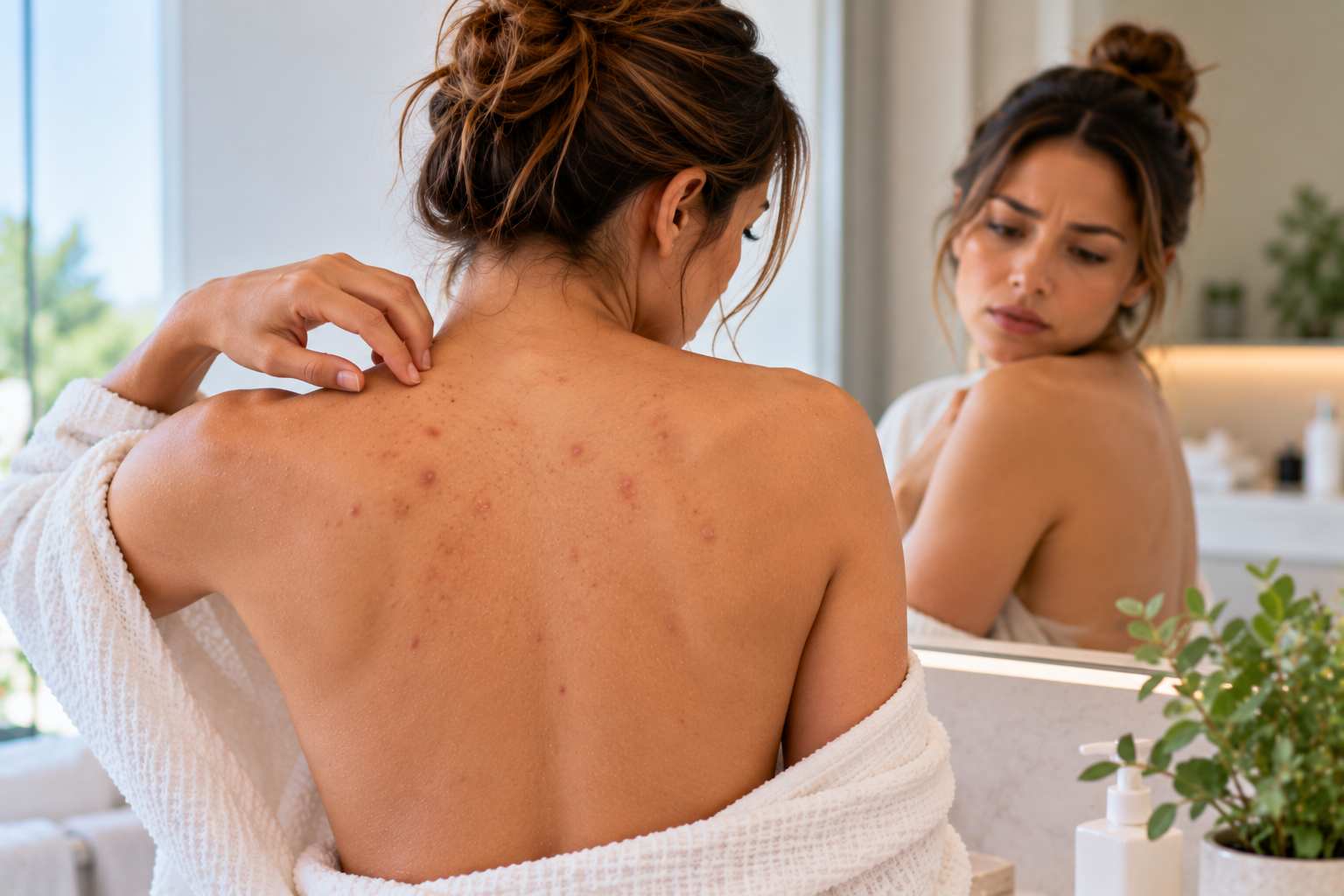
Back acne has a way of showing up at the worst times: right before a pool day, a wedding with an open-back dress, or the first warm weekend on the trail. Because it is out of sight, many people ignore it for months, then feel frustrated when it seems to have a mind of its own.
Back acne is common, and it is not a sign that you are doing something wrong. Understanding what triggers it is the first step toward clearer skin. Re-Glo Aesthetics in Los Gatos created this guide to explain the causes, the daily habits that make a difference, and when it is time to bring in professional help.
What Is Back Acne?
Back acne is acne that forms on the upper back, shoulders, and sometimes the chest. It develops the same way facial acne does: pores and hair follicles become clogged with oil and dead skin cells, which can lead to blackheads, whiteheads, pimples, and deeper, painful bumps.
The Mayo Clinic notes that acne usually appears on the face, forehead, chest, upper back, and shoulders, because these areas have more oil glands. The skin on the back is also thicker, which is one reason breakouts there can feel deeper and take longer to calm down.
What Causes Back Acne?
Back acne is usually caused by a mix of excess oil, clogged pores, bacteria, and inflammation, made worse by sweat, friction, and certain products. Hormones, genetics, and stress can also play a role.
Common triggers include:
- Sweat left on the skin: Waiting hours to shower after a workout gives sweat and oil time to sit in pores.
- Friction and pressure: Backpacks, tight synthetic workout tops, sports gear, and even car seats on long commutes can rub and trap heat.
- Hair and body products: Heavy conditioners, oils, and body lotions can run down the back and clog pores.
- Hormones: Hormonal shifts can increase oil production at any age.
- Stress: The American Academy of Dermatology notes that stress can stimulate oil glands and hair follicles in adults.
- Genetics: A family history of acne makes breakouts more likely.
Not every bump on the back is acne. Some conditions, such as irritated hair follicles or yeast-related folliculitis, can look similar but need a different approach. If your breakouts are very itchy, look uniform in size, or are not responding to typical acne care, a medical evaluation can clarify what is going on.
Why Do Gen Z and Younger Adults Get Back Acne So Often?
Teens and younger adults tend to have higher oil production, more frequent workouts, and busy lifestyles that make post-sweat showers easy to skip. Add tight athletic wear and heavy backpacks, and the back becomes a common breakout zone.
For college students, gym regulars, climbers, and anyone training for a race along the Los Gatos Creek Trail, these small habits add up. Younger adults are also more likely to try viral skin hacks, like scrubbing the back with harsh exfoliators or applying undiluted home remedies, which can irritate skin and make inflammation worse.
A few simple changes go a long way:
- Rinse off as soon as possible after workouts, even if it is a quick shower.
- Change out of sweaty clothes right away.
- Choose breathable, moisture-wicking fabrics and wash workout clothes after every use.
- Avoid picking or squeezing, which can lead to dark marks and scarring.
Why Do Men Tend to Struggle With Back Acne?
Men often have more active oil glands, and many skip body care beyond a quick rinse, which can let oil and sweat build up. Sports equipment, heavier gym sessions, and thicker body hair can also trap heat and friction against the skin.
Men are also less likely to seek help for breakouts on the body, often waiting until acne is painful or leaving marks. If your back acne includes deep, tender bumps, or if you notice scarring, it is worth being evaluated sooner rather than later. Practical habits include using a gentle, non-comedogenic body wash, keeping sheets and towels clean, and avoiding heavy, fragranced body lotions.
Can Stress and a Busy Schedule Make Back Acne Worse?
Yes. Stress can increase oil production and inflammation, and a packed schedule makes it harder to keep up with simple habits like showering after exercise or washing workout clothes promptly.
Busy Silicon Valley professionals often squeeze in a lunchtime workout or a bike commute, then sit at a desk for hours in the same clothes. Long flights and hotel stays can also disrupt routines. Building a few automatic habits helps:
- Keep a spare shirt and body wipes at work for days you cannot shower right away.
- Pack your own non-comedogenic products when traveling.
- Protect sleep where you can, since rest supports overall skin health.
Re-Glo's blog post on whether stress can cause acne explores the stress and skin connection in more detail.
What Daily Habits Help Clear Back Acne?
Consistent, gentle care helps more than aggressive scrubbing. Focus on cleansing after sweat, reducing friction, choosing non-clogging products, and giving any new routine several weeks to work.
Helpful habits include:
- Washing with a gentle body cleanser daily and after workouts.
- Rinsing hair conditioner thoroughly, then washing your back last in the shower.
- Using oil-free or non-comedogenic body moisturizers and sunscreens.
- Changing pillowcases and sheets regularly.
- Avoiding harsh scrubs and loofahs that irritate inflamed skin.
- Protecting your skin from the sun, since UV exposure can darken post-acne marks.
Re-Glo's acne treatment options page and essential skin care tips are good companion reads.
When Should You See a Professional for Back Acne?
See a professional if back acne is painful, leaving marks or scars, spreading, or not improving after several weeks of consistent care. Deep, cystic, or scarring acne should be evaluated by a physician or dermatologist.
The Mayo Clinic advises seeing a primary care doctor when self-care does not clear acne, and a dermatologist for persistent or severe acne. A sudden onset of severe acne in an adult can also be a sign of an underlying condition worth checking. If you already use prescription acne medication, do not stop or change it on your own. Talk with your prescriber first.
How Can a Skin Consultation Help if You Struggle With Acne?
A skin consultation gives you a professional look at your skin, your daily habits, and the products you use, so you can better understand what may be contributing to breakouts. For back acne specifically, a physician or dermatologist is the right partner for diagnosis and medical treatment.
At Re-Glo, consultations include a skin evaluation, a conversation about your concerns and goals, and a personalized recommendation. For acne in general, Re-Glo offers Aerolase Neo, a laser designed to target three major acne factors: excess oil, inflammation, and bacteria. Your provider can explain how it works and whether it suits your skin.
The American Academy of Dermatology notes that lasers and light treatments can reduce acne but rarely clear it on their own, so they work best as one part of a broader plan. Most people need a series of sessions, and results vary. For breakouts on the back, shoulders, or chest, the daily habits above remain your foundation, with a dermatologist guiding any medical treatment you need.
Back Acne FAQs
Why do I only get acne on my back?
The back has many oil glands and thicker skin, and it is exposed to sweat, friction, and hair products. These factors can trigger breakouts there even when your face stays clear.
Does sweat cause back acne?
Sweat itself does not cause acne, but leaving sweat and oil on your skin, especially under tight clothing, can clog pores and trigger breakouts. Showering soon after exercise helps.
Can my shampoo or conditioner cause back acne?
Yes, heavy hair products can run down your back and clog pores. Rinse conditioner thoroughly and wash your back last in the shower.
How long does it take to clear back acne?
With consistent care, many people see improvement over several weeks. Persistent, deep, or scarring acne may need medical treatment, so check in with a professional if you are not improving.
Should I see a dermatologist for back acne?
Yes, if your back acne is painful, cystic, scarring, or not responding to home care. A dermatologist can diagnose the type of acne and recommend medical treatment.
Does laser treatment work for acne?
Lasers and light treatments can help reduce acne for some people, usually over a series of sessions, but they rarely clear acne on their own. They work best alongside a consistent routine and, when needed, medical care.
Back to Clear Skin, With a Little Help
Back acne can feel stubborn, but with smarter daily habits and the right support, clearer skin is a realistic goal. Whether you are a student, an athlete, or a professional juggling workouts and work, consistent care and the right professional guidance make the difference.
Re-Glo Aesthetics welcomes patients from Los Gatos, Campbell, Saratoga, and San Jose. Visit the Re-Glo homepage to explore treatments, or book your consultation online. You can also call 408-827-4021 or visit 10 Jackson Street, Suite 108, Los Gatos, CA 95030.