
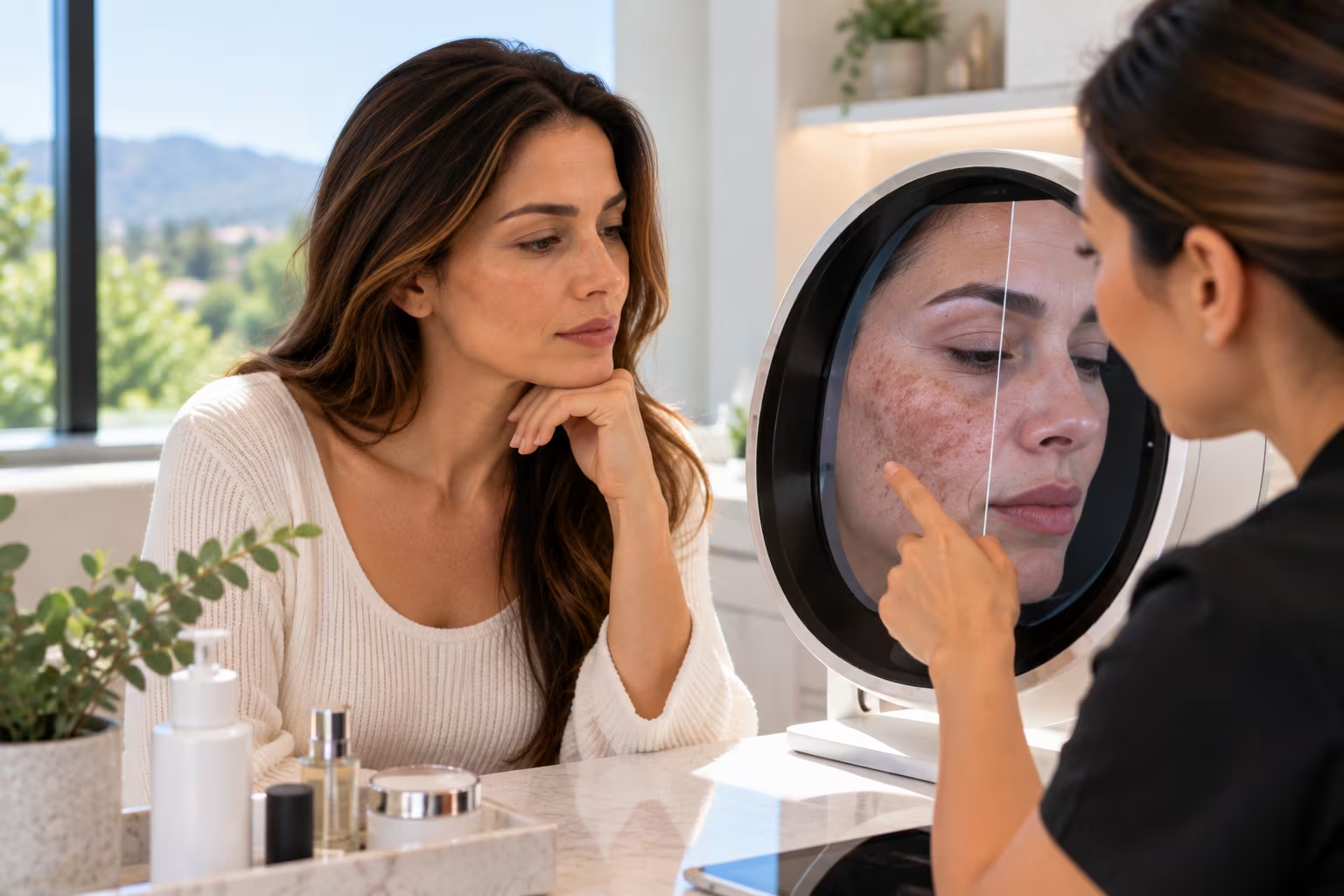
Once you have decided to do something about uneven skin tone, the next question is usually the harder one. Do you start with a peel, ask about laser, or give topical brighteners a few more months to work? With so many products and treatments claiming to fix pigmentation, it is worth understanding how the main options actually compare before committing time and money to any one of them. This guide breaks down the realistic differences between the most common approaches to skin pigmentation treatment available today.
What Are the Main Categories of Pigmentation Treatment?
Pigmentation treatment generally falls into three categories: topical products, chemical peels, and energy based devices like laser or light treatments. Each works through a different mechanism, which is exactly why they tend to produce different speeds and depths of results.
Topical treatments, including ingredients like vitamin C, niacinamide, and prescription strength brightening agents, work gradually by slowing pigment production and supporting cell turnover. Chemical peels accelerate that turnover more directly, removing the outer layers of skin where pigment sits. Energy based devices target pigment with light or heat, breaking it down more precisely, often with the added benefit of improving overall skin tone and texture in the process.
How Do Chemical Peels Compare to Topical Products?
Chemical peels tend to produce faster, more visible results than topical products alone, because they physically exfoliate pigmented skin cells rather than relying solely on slowing future pigment production. For patients who have already tried consistent topical care without much change, a peel is often the logical next step.
Our approach to customized peels for sun damage and melasma is built around tailoring peel strength and formulation to your specific pigmentation pattern, since sun spots, melasma, and post inflammatory marks do not all respond the same way to the same peel. This individualized approach tends to matter more than people expect, particularly for melasma, which can worsen with a peel that is too aggressive.
How Do Energy Based Treatments Like Laser Compare?
Energy based treatments can target pigment with more precision than a topical or peel based approach, often addressing stubborn or deeper discoloration that has not responded well to other methods. At Re-Glo, our Aerolase Era and Aerolase Neo platforms are used to address pigmentation concerns alongside overall skin tone and texture, offering an option for patients looking for a more comprehensive result.
These treatments tend to work particularly well as part of a broader plan that also includes peels or ongoing topical maintenance, rather than as a single standalone fix, since pigmentation is rarely caused by just one factor.
Is One Approach Better Than the Others?
There is no single best approach for everyone, since the right choice depends heavily on the type of pigmentation you are dealing with, your skin type, and how much time you are willing to invest in gradual improvement versus a more active treatment plan. This is exactly why a consultation matters so much before choosing a direction.
Many patients end up using a combination approach, starting with a professional treatment to address existing pigmentation while maintaining results with a simplified topical routine and consistent sun protection going forward.
How Does Skin Type Affect Which Treatment Is Right for You?
Skin type and pigmentation depth both influence which treatment will be safest and most effective for your specific skin. Deeper skin tones, for example, require careful selection of peel strength and energy based settings to avoid triggering additional pigmentation as a side effect of treatment.
This is one of the most important reasons to have pigmentation evaluated in person rather than choosing a treatment based on general online advice, since what works well for one skin type can produce the opposite of the intended result on another.
What Role Does Sun Protection Play in Any Treatment Plan?
Sun protection is essential to the success of every pigmentation treatment, regardless of which approach you choose, since UV exposure directly stimulates the pigment producing cells responsible for discoloration in the first place. Skipping daily sun protection during and after treatment can undo progress fairly quickly.
Our sun protection importance resource covers the basics of building sunscreen into a daily routine, which becomes especially important for anyone actively treating pigmentation in a sunny climate like the greater Los Gatos area.
How Long Should You Expect Treatment to Take?
Meaningful improvement in pigmentation typically develops over a series of sessions rather than all at once, since the skin needs time to fully respond and recover between treatments. Peels are often spaced a few weeks apart, while energy based treatments follow their own recommended intervals based on your specific plan.
Patients who understand this timeline going in tend to feel more satisfied with the process, since expecting an instant transformation from a single session usually leads to disappointment regardless of which treatment is chosen.
Who Should Consider a Combination Treatment Approach?
Anyone with more resistant or long standing pigmentation, or a mix of different pigmentation types at once, is often a good candidate for combining approaches rather than relying on just one. A thorough consultation can map out which combination makes the most sense for your specific skin and goals.
Frequently Asked Questions
Is laser treatment more effective than a chemical peel for pigmentation? Neither is universally better. The right choice depends on your specific pigmentation type, skin tone, and how your skin has responded to previous treatments.
Can I use topical brightening products alongside professional treatment? Yes, many patients use a simplified topical routine to support and maintain results between professional sessions.
Will pigmentation treatment work if I have melasma? Melasma can improve with the right conservative approach, though it typically requires a gentler, more patient treatment plan than sun spots or post inflammatory marks.
How soon will I see a difference after starting treatment? Many patients notice initial improvement within the first few sessions, with more complete results developing over a full treatment series.
Do I need to stop treatment during the summer? Sun exposure needs to be managed carefully during any pigmentation treatment, so your provider may adjust timing or intensity depending on the season.
Ready to Stop Guessing Which Option Is Right for You?
With so many products and treatments on the market, it makes sense that choosing the right path for uneven skin tone feels overwhelming. A personalized evaluation takes the guesswork out of the equation and points you toward the approach most likely to actually work for your skin.
Explore our Aerolase treatment options or contact our Los Gatos team to build a pigmentation treatment plan suited to your skin. This article was updated in September 2026 to reflect current treatment options available at Re-Glo.