
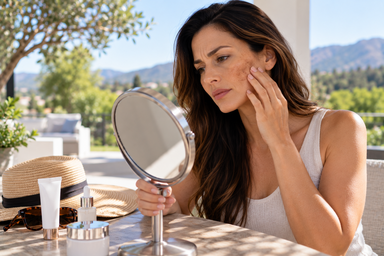
You apply sunscreen most mornings, you avoid the harshest hours of midday sun when you can, and yet those brown patches on your cheeks or the dark spots left behind from an old breakout never seem to fully fade. It is one of the more frustrating skin concerns because it can feel like nothing you do makes a lasting difference. Understanding what actually causes hyperpigmentation is the first step toward treating it effectively, and it is a big part of why so many people around Los Gatos, California eventually look beyond over the counter products for a real answer.
What Exactly Is Hyperpigmentation?
Hyperpigmentation is a general term for patches of skin that appear darker than the surrounding area because they contain excess melanin, the pigment responsible for skin color. It shows up in several distinct forms, and knowing which type you are dealing with matters a great deal for choosing the right treatment.
Sun spots, also called solar lentigines, develop from years of cumulative UV exposure and tend to appear on the face, hands, and chest. Melasma presents as larger, symmetrical patches, often triggered or worsened by hormonal changes, and is notoriously stubborn to treat. Post inflammatory hyperpigmentation is the dark mark left behind after a pimple, cut, or other skin injury heals, and it is extremely common in people who deal with acne.
What Actually Causes Hyperpigmentation to Develop?
Hyperpigmentation develops when melanocytes, the cells that produce pigment, go into overdrive in response to a trigger. Identifying your specific trigger helps explain why a spot appeared where it did and why it may be resistant to fading on its own.
UV exposure is the most common trigger, which is why sun spots tend to appear in the exact places that get the most daily sun, like the cheekbones and the backs of the hands. Hormonal shifts from pregnancy, birth control, or hormone therapy are the primary driver behind melasma. Inflammation from acne, eczema, or even an aggressive skincare product can trigger post inflammatory marks, and certain medications can increase photosensitivity and make pigmentation worse. Given how sunny the Los Gatos and greater Silicon Valley area tends to be throughout the year, cumulative sun exposure is often a bigger factor than people realize, even for those who consider themselves diligent about sunscreen.
Why Does Sunscreen Alone Not Fully Prevent It?
Sunscreen is essential and it absolutely reduces new pigmentation from forming, but it does very little to fade a spot that already exists. Once melanin has clustered into a visible patch, that pigment sits in the skin and typically needs to be broken down or exfoliated away rather than simply prevented going forward.
This is also why so many people feel like they are treading water. They are successfully preventing new spots while existing ones remain untouched, which can make it seem like sunscreen is not working when in reality it is doing exactly what it is designed to do. For a deeper look at why consistent sun protection still matters even after pigmentation appears, our resource on sun protection importance covers the basics worth knowing.
What Treatments Actually Help Fade Existing Pigmentation?
Fading existing pigmentation generally requires a treatment that works below the surface layer of skin, either by encouraging faster cell turnover or by targeting the pigment itself. At Re-Glo, this is where professional treatment options come into the conversation.
Customized chemical peels are one of the most effective tools for surface level pigmentation and sun damage, gently removing the outer layers of skin where discoloration sits and encouraging fresher, more even toned skin to surface. Our article on perfect peels for sun damage and melasma goes into more detail on how a tailored peel protocol is built around your specific pigmentation pattern. For patients with more resistant or deeper pigmentation, energy based treatments like Aerolase Era or Aerolase Neo can target pigment more precisely while supporting overall skin tone and texture.
Is Melasma Treated Differently Than Sun Spots?
Melasma requires a more conservative and patient approach than sun spots, since aggressive treatment can actually worsen it by triggering more inflammation and rebound pigmentation. A layered strategy that combines gentle, consistent treatment with strict sun protection tends to produce the most stable, lasting results.
Because melasma is closely tied to hormonal activity, it can also fluctuate on its own regardless of treatment, which is important to understand going in so expectations stay realistic. A thorough consultation helps determine whether your pattern of pigmentation looks more like classic sun damage, melasma, or a combination of both.
How Long Does It Take to See Improvement?
Most patients notice a gradual lightening over a series of sessions rather than an overnight change, since pigment correction works with the skin's natural turnover cycle. Chemical peels are often spaced several weeks apart to allow the skin to fully recover and respond between treatments, while energy based options follow their own recommended intervals.
Patience really does pay off here. Rushing treatment or over treating pigmented skin tends to backfire, especially for melasma, so a measured pace generally produces the better long term result.
Who Should Consider Professional Treatment for Hyperpigmentation?
Anyone who has tried consistent sunscreen and over the counter brightening products without meaningful improvement is a reasonable candidate for a professional evaluation. This is especially true for melasma, which rarely responds well to store bought products alone.
A consultation can confirm which type of pigmentation you are dealing with and rule out any underlying skin condition that might need a different kind of attention.
Frequently Asked Questions
Is hyperpigmentation the same thing as melasma? No, melasma is one specific type of hyperpigmentation, typically hormonally driven, while sun spots and post inflammatory marks are separate categories with different causes.
Will hyperpigmentation go away on its own? Some mild post inflammatory marks fade gradually over months, but sun spots and melasma typically need active treatment to see meaningful improvement.
Can hyperpigmentation come back after treatment? Yes, especially if sun exposure or the original trigger is not well managed, which is why ongoing sun protection is such an important part of maintaining results.
Are chemical peels safe for all skin tones? Peels can be customized in strength and formulation, but the right approach depends on your specific skin type and pigmentation pattern, which is best assessed during a consultation.
How soon will I see results from a peel? Many patients notice improved tone and texture within a few days of a single peel, with more significant fading building over a series of sessions.
Ready to Get Ahead of Those Stubborn Spots?
Dark spots are rarely a sign that you have done something wrong. They are simply a common response to sun exposure, hormones, or inflammation that most skincare products cannot fully reverse on their own. The good news is that with the right treatment plan, meaningful fading is very achievable.
Learn more about our customized peel treatments and Aerolase options, or contact our Los Gatos team to find the right path forward for your skin. This article was updated in September 2026 to reflect current treatment options available at Re-Glo.