
Scars have a way of sticking around long after the original breakout, cut, or injury has healed. For a lot of people, it's not the scar itself that's frustrating so much as how it changes the way their skin catches light, sits under makeup, or simply feels to the touch. If you've been researching scar treatment options, you've probably realized there's no single fix that works for everyone, because scars themselves aren't all the same.
At Re-Glo Aesthetics in Los Gatos, California, scar treatment is approached with an understanding of scar type, skin type, and realistic expectations. This guide covers the different types of scarring, what causes them, and which treatments tend to work best for each.
What Are the Different Types of Scars?
Atrophic Scars
These are depressed or indented scars, most commonly associated with acne. They form when the skin's healing response doesn't produce enough collagen to fill the wound completely, leaving a sunken texture behind.
Hypertrophic Scars
Raised scars that form when the body produces excess collagen during healing. These are firm to the touch and can appear reddish or darker than surrounding skin initially.
Post-Inflammatory Hyperpigmentation
Technically not a scar in the traditional sense, this refers to darkened patches left behind after acne or injury heals. It's extremely common, particularly in medium to deep skin tones, and often gets mistaken for permanent scarring when it's actually a pigmentation issue that fades with time and the right treatment.
Keloid Scars
A more pronounced version of hypertrophic scarring, keloids extend beyond the original wound boundary and require careful, specialized treatment planning.
What Causes Acne Scarring Specifically?
Acne scars form when inflammation from a breakout damages the surrounding collagen and tissue structure. The deeper and more inflamed the breakout, particularly with cystic acne, the more likely it is to leave lasting textural changes. Picking or squeezing blemishes significantly increases the risk of scarring by extending and worsening the inflammatory damage.
Genetics also plays a role in how a person's skin heals and how visibly it scars. Some people can experience fairly severe acne without significant scarring, while others develop noticeable texture changes from relatively mild breakouts. Skin tone matters too, since post-inflammatory hyperpigmentation tends to be more pronounced and longer-lasting in deeper skin tones.
When Should You Seek Professional Scar Treatment?
Many scars fade or improve somewhat on their own within the first year, particularly post-inflammatory hyperpigmentation. However, textural scars, atrophic scarring in particular, generally don't resolve on their own and tend to become more noticeable as skin loses collagen and elasticity with age. If a scar has been stable for over a year without improvement, or if it's affecting your confidence day to day, that's typically a reasonable point to explore professional treatment.
What Scar Treatment Options Are Available at Re-Glo?
Laser Resurfacing and Ablation
The Aerolase Era is one of the more effective options for textural acne scarring available at Re-Glo. By removing damaged surface tissue and stimulating new collagen production, it helps fill in depressed scarring over a series of sessions. Because treatment depth is customizable, your provider can calibrate intensity to match the severity of your scarring, whether that's a lighter approach for subtle texture concerns or deeper ablation for more pronounced scarring. Our earlier guide on what ablation treatment involves covers this in more detail.
Microneedling
Microneedling creates controlled micro-injuries that trigger the skin's natural collagen production, which can gradually improve the appearance of atrophic scarring over a series of treatments. This is one of the more established scar treatment options and is often recommended for clients wanting a gradual, lower-downtime approach. Our article on how Toskani Med mesoneedling works for collagen stimulation explains this process further.
RF Microneedling
Combining microneedling with radiofrequency energy adds a deeper collagen-stimulating effect, which can be particularly helpful for more established or deeper scarring.
Chemical Peels
Peels like the Perfect Derma Peel can help improve surface-level texture and pigmentation associated with post-inflammatory marks, particularly when scarring is more superficial. For scarring tied closely to sun damage or melasma-related discoloration, our article on perfect peels for sun damage and melasma offers additional detail.
How Do You Know Which Scar Treatment Is Right for You?
The right treatment depends heavily on scar type, depth, and your skin's specific characteristics. Shallow, widespread texture irregularities often respond well to microneedling or lighter resurfacing, while deeper, more defined atrophic scars may benefit from ablation at a medium or deep setting. Hypertrophic and keloid scars require a different, more specialized approach that your provider can discuss during a consultation.
This is why a proper evaluation matters so much with scar treatment. What works beautifully for one person's scarring might be the wrong intensity entirely for someone else's, even if the scars look superficially similar.
What Should You Expect During Treatment and Recovery?
Recovery timelines vary significantly depending on which treatment approach is used. Microneedling typically involves one to three days of mild redness, similar to a light sunburn. Laser resurfacing and ablation recovery scales with treatment depth, ranging from minimal downtime for superficial settings to five to seven days or more for deeper ablation.
Most scar treatments require a series of sessions spaced weeks apart, since collagen remodeling is a gradual biological process that can't be rushed. Patience matters here. Meaningful improvement in scar texture typically builds over several months rather than appearing after a single visit.
Can Scarring Be Fully Erased?
It's worth setting realistic expectations early. Most scar treatments significantly improve the appearance and texture of scarring rather than erasing it completely. The goal with treatments at Re-Glo is a natural-looking improvement, smoother texture, more even tone, and less noticeable scarring, rather than a promise of complete removal, which isn't a realistic outcome for most established scars.
Local Considerations in Los Gatos
Because sun exposure can worsen the appearance of post-inflammatory hyperpigmentation and slow healing after scar treatments, diligent daily sun protection is especially important for Los Gatos residents undergoing any form of scar treatment. Your provider will likely emphasize this as a key part of your aftercare plan.
Why Choose Re-Glo Aesthetics for Scar Treatment?
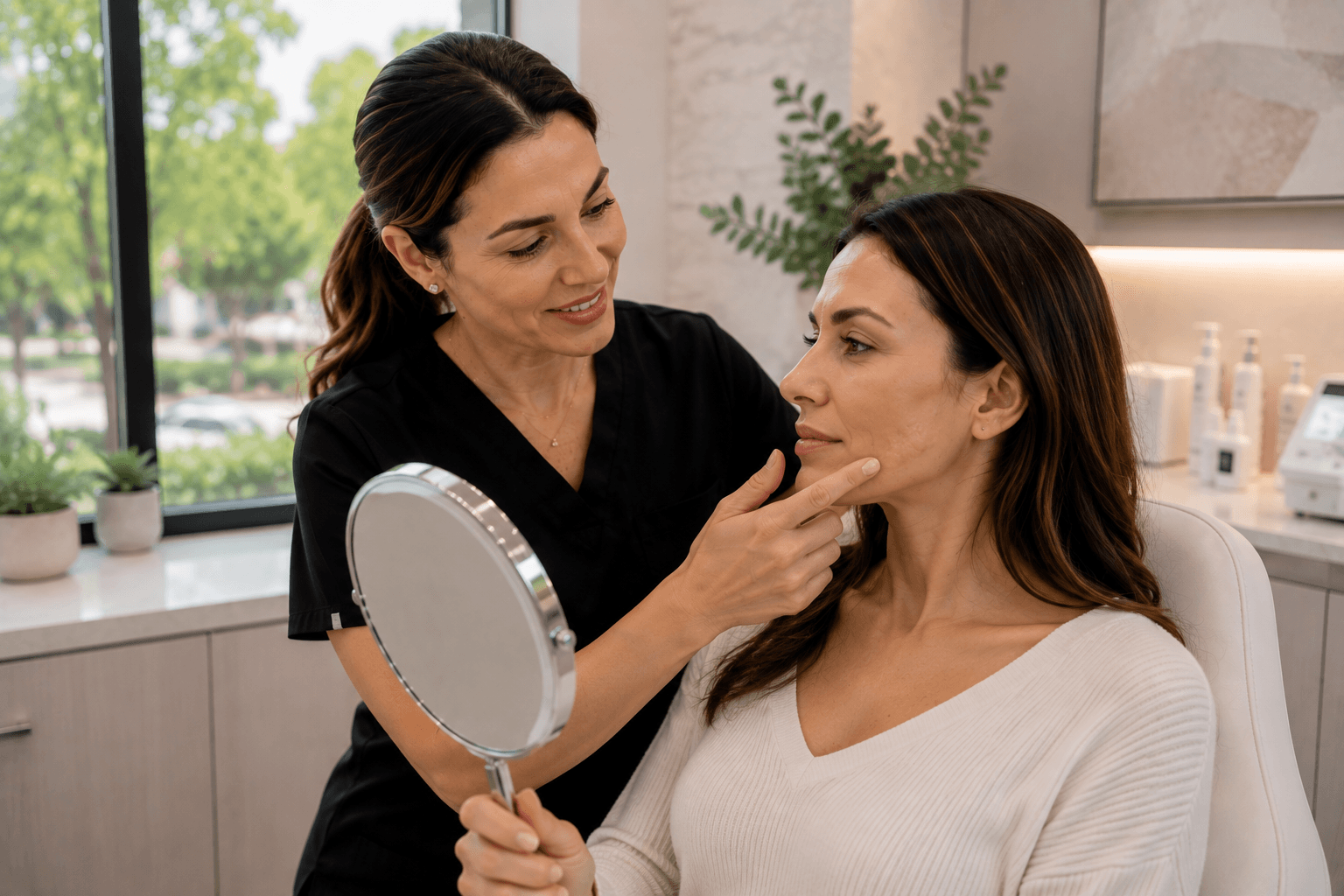
Re-Glo Aesthetics evaluates each scar individually rather than applying a one-size-fits-all protocol. Your provider will assess your scar type, skin tone, and goals to recommend the treatment or combination of treatments most likely to deliver visible, natural-looking improvement.
Ready to Address Your Scarring?
Reach out to Re-Glo Aesthetics to schedule a consultation and find the right scar treatment plan for your skin.
New Chapter, Smoother Pages
Scars tell a story, but they don't have to be the loudest part of the page. With the right treatment plan and a little patience, most scarring can be significantly softened, leaving skin that feels smoother and looks more even, without losing what makes your skin uniquely yours.
Updated August 2026.
Frequently Asked Questions
What is the most effective scar treatment for acne scars? It depends on the type and depth of scarring, but laser resurfacing and ablation tend to produce the most noticeable results for textural atrophic scarring, while microneedling offers a gradual, lower-downtime alternative.
Can scar treatment completely remove scars? Most treatments significantly improve the appearance of scarring rather than eliminating it entirely. The goal is a smoother, more even texture rather than complete removal.
How many sessions does scar treatment usually require? This varies by treatment type and scar severity, but a series of three or more sessions spaced several weeks apart is common for microneedling and resurfacing-based scar treatments.
Is scar treatment safe for darker skin tones? Yes, when the right technology and settings are used. The Aerolase Era in particular was designed with a reduced risk of post-inflammatory hyperpigmentation, making it a safer option across a range of skin tones.
Does scar treatment hurt? Discomfort levels vary by treatment. Microneedling and lighter resurfacing are generally well tolerated, while deeper ablation for more significant scarring typically involves topical numbing beforehand.